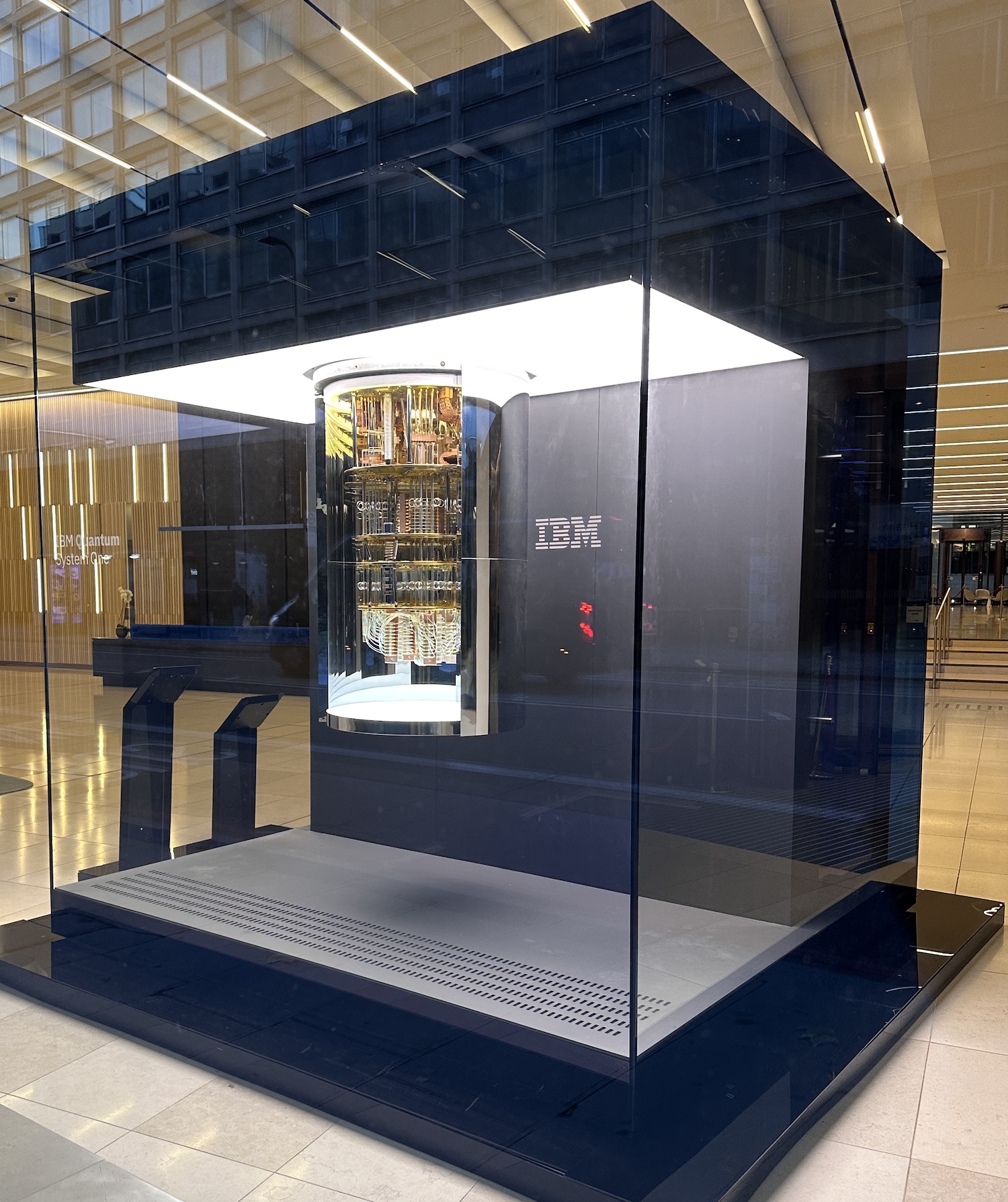
The Pistoia Alliance hosted a joint meeting with IBM at their offices in London with expert speakers from the Wellcome Sanger Institute, Johnson & Johnson Innovative Medicine and IBM sharing insights into the development and application of this transformative technology.
Everybody agreed that it’s not a case of ‘if’ quantum computing will become a reality it’s ‘when’. Our panel of experts discussed how life sciences and healthcare could be one of the first industries to benefit from quantum computing, particularly for solving optimization challenges and that collaboration will be key in ensuring our industry is ready and able to harness the benefits this technology can deliver.
Here are five key takeaways from the meeting:
- AI and quantum will evolve as complementary pillars
AI and quantum are anticipated to evolve together, forming a continuous pipeline from knowledge extraction to physics-grounded simulation typically within hybrid quantum–classical HPC workflows. Quantum and AI shouldn’t be viewed as rivals but as complementary pillars of next-generation computing, together enabling capabilities that classical systems cannot achieve. Key benefits will include deeper scientific insight and faster discovery cycles.
- As early as 2026 could be the year of ‘quantum advantage’
IBM’s roadmap suggests that ‘quantum utility’, the stage where quantum hardware will surpass classical simulation, has already been achieved. IBM’s milestone for practical ‘quantum advantage’ is anticipated during 2026, with chemistry, materials, and complex optimization anticipated to benefit first. ‘Fault tolerance’, targeted for 2029, will unlock deep circuits and long iterative workflows once thought unreachable.
- Quantum will augment future workflows
Applications of quantum computing are envisaged across the pharmaceutical value chain. Despite quantum’s infancy numerous companies across different industries have already invested in the technology. Wellcome Sanger Institute is pioneering theapplication of quantum computing in pangenomics, an area where classical bioinformatics is reaching structural limits. Genomics could become one of the earliest major beneficiaries of quantum computing, augmenting areas where heuristics currently dominate, opening new possibilities in immunology, cancer genomics, and evolutionary biology.
- Quantum won’t solve everything
Quantum won’t solve everything but will do certain things really well and will be powerful when combined with CPUs and GPUs currently used. Both AI and quantum computing are often over-hyped. What matters is whether these technologies solve problems that scientists actually face at the bench and how they can help address unmet needs. For users who can frame their problem as an optimization problem there will most likely be a quantum computing solution in the future. One of the challenges will be building enough knowledge in organizations to get people excited and able to spot use cases.
- Adoption will be driven by collaboration
Adoption is not likely to be limited by hardware but workflow integration and translational expertise. There is currently a skills gap – quantum physicists lack an understanding of drug discovery, and biologists rarely understand quantum mechanics. Bridging this gap requires translational skills, industrial PhD models, and cross-industry collaboration. Early adopters should focus on realistic expectations, skills, and partnerships.
The Pistoia Alliance set up its Quantum Computing Community of Interest five years ago to provide a neutral, pre-competitive collaboration forum to define use cases, share insights and influence the vendor ecosystem. Our belief that quantum adoption will be driven by collective experimentation, shared infrastructure, and trusted collaboration – not hype – stands firm today.
Quantum is the next step in the continuum of computational innovation that the Pistoia Alliance has historically helped its members navigate and we look forward to welcoming interested parties from pharma, academic organizations and vendors to join us in our efforts to ensure that the life sciences industry is ready and able to capitalize on this game-changing technology.
We are currently planning our 2026 program of activities. If you’d like to get involved in helping to fund our Quantum Computing Community of Interest or are interested in speaking at one of our events, please contact John Wise via email: john.wise@pistoiaalliance.com.
To watch, on-demand, the most recent series of Quantum Computing Community webinars, login and view here.